05 |队列
一、什么是队列?
队列是一种“操作受限”的线性表,只允许在一端插入和另一端输出。
队列和栈都是操作受限的线性表,区别在于栈是一头操作的,先进后出,后进先出,队列是尾部进入,头部输出。
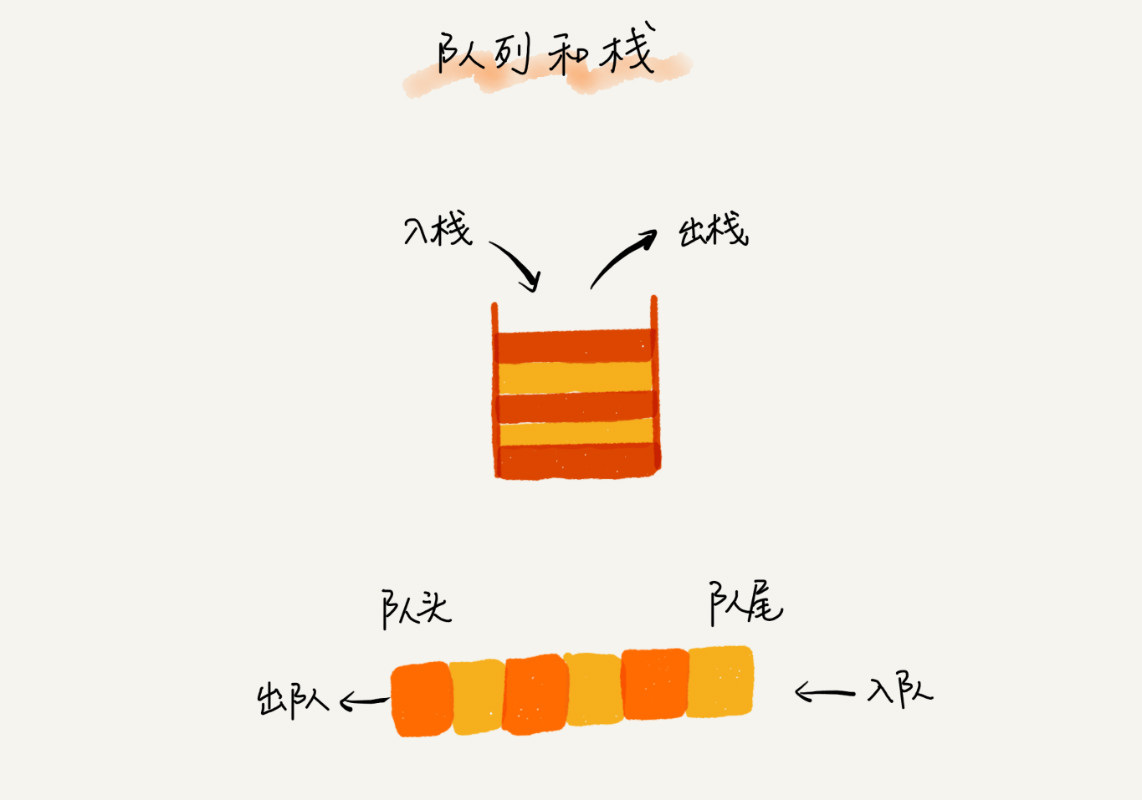
队列的概念很好理解,基本操作也很容易掌握。作为一种非常基础的数据结构,队列的应用也非常广泛,特别是一些具有某些额外特性的队列,比如循环队列、阻塞队列、并发队列。它们在很多偏底层系统、框架、中间件的开发中,起着关键性的作用。比如高性能队列 Disruptor、Linux 环形缓存,都用到了循环并发队列;Java concurrent 并发包利用 ArrayBlockingQueue 来实现公平锁等。
二、队列的类型
1.顺序队列
用数组实现的队列叫作顺序队列
//大佬写的代码
// 用数组实现的队列
public class ArrayQueue {


  // 数组:items,数组大小:n
  private String[] items;
  private int n = 0;
  // head表示队头下标,tail表示队尾下标
  private int head = 0;
  private int tail = 0;

  // 申请一个大小为capacity的数组
  public ArrayQueue(int capacity) {


    items = new String[capacity];
    n = capacity;
  }

  // 入队
  public boolean enqueue(String item) {


    // 如果tail == n 表示队列已经满了
    if (tail == n) return false;
    items[tail] = item;
    ++tail;
    return true;
  }

  // 出队
  public String dequeue() {


    // 如果head == tail 表示队列为空
    if (head == tail) return null;
    // 为了让其他语言的同学看的更加明确,把--操作放到单独一行来写了
    String ret = items[head];
    ++head;
    return ret;
  }
}

//他自己优化的代码
   // 入队操作,将item放入队尾
  public boolean enqueue(String item) {


    // tail == n表示队列末尾没有空间了
    if (tail == n) {


      // tail ==n && head==0,表示整个队列都占满了
      if (head == 0) return false;
      // 数据搬移
      for (int i = head; i < tail; ++i) {


        items[i-head] = items[i];
      }
      // 搬移完之后重新更新head和tail
      tail -= head;
      head = 0;
    }

    items[tail] = item;
    ++tail;
    return true;
  }